How I Chose My Tech Stack While Building My First SaaS

I didn’t set out to build a full Software as a Service. Honestly, I was thinking of building something simple, a micro-tool that could help business owners make quick accessibility fixes without getting overwhelmed. But the more I talked with people, the more it became clear: a tiny tool wasn’t going to solve the real problems. The gap was much bigger, and so was the opportunity.
That’s how Successible shifted from “maybe this is a micro-tool” to “I guess I’m building a SaaS now.” 🤪
Because of that, I had to get SUPER CLEAR about what I needed behind the scenes. Not the big, flashy tech, just the essentials that would help me:
build momentum
bring in early supporters
run live previews
communicate clearly
and raise funds without burning myself out
(Full disclosure at the time of writing this, what you see online is only a fraction of what I share. I am just starting to pull myself out of burnout/depression/mental health challenges.)
I needed tools that gave me back energy, not draining me.
Tools that were simple, reliable, accessible, and didn’t require bringing a VA or OBM into the mix.
Tools that didn’t create more work for me.
Tools that let me bring people into the process while I’m building Successible.
That’s how Flodesk ended up becoming the foundation of my early infrastructure, not because I planned it that way, but because it quietly solved problems I didn’t have the capacity to solve manually.
This is my experience. Yes, I’m a Flodesk Partner and may earn a commission, but everything I’m sharing is directly from how I’m building Successible behind the scenes.
Raising Funds While Building Community
Successible started as a simple idea: make accessibility easier inside the tools small businesses already use. Flodesk is one of them.
I’ve been with Flodesk from the start, and I’ve always appreciated how they build: bootstrapped, community-first, solving real problems. That’s the same approach I want for Successible.
But here’s what people don’t see: you have to fund a product long before it exists.
I wasn’t interested in taking on debt.
I wasn’t hiring a VA/OBM before I had the budget.
And I definitely wasn’t duct-taping together five tools just to run a simple launch.
I needed a setup that would let me:
share my progress
educate my audience
run live previews
collect payments
welcome early adopters
and keep everything consistent and accessible
That meant choosing tools I trusted, not just for looks, but for stability.
The Three Things I Looked For in My Tech Stack
1. Ease of use
If it required a manual, a custom workflow, or a 12-step setup, I didn’t want it.
2. Low cognitive load
As someone who navigates the world with limited vision and hearing, cluttered interfaces are exhausting. If it’s overwhelming to me, it’s overwhelming to my audience.
3. Built-in accessibility potential
No tool is perfect, but I look for platforms that make accessibility possible without a fight.
Flodesk checked all three boxes.
Sign-Ups Through Email Were the First Thing I Needed to Get Right
I’d already been using Flodesk for my emails. But building a SaaS meant I needed something different: a reliable, seamless way for people to sign up for things such as: Live Previews, updates, early access, and charter membership.
This part wasn’t optional.
If people couldn’t sign up easily, nothing else in my build would matter.
I knew I needed:
a simple signup flow
instant confirmation emails
clear delivery of event links
accurate tagging
and zero friction for people who were already busy
And honestly? I needed all of that without adding another platform, another subscription, or a whole onboarding system I didn’t have time (or budget) to maintain.
Getting sign-ups right was the foundation.
If the entry point into Successible was clunky, confusing, or unreliable, I’d lose momentum and lose trust.
Flodesk made that part easy.
And “easy” was exactly what I needed.
Why Flodesk is the Center of My Tech Stack
I didn’t choose Flodesk because it was “the best email platform on the market.” I chose it because it solved the exact problems I had.
A design-first approach (without sacrificing accessibility)
People assume accessibility means “ugly.” It doesn’t.
Accessibility relies on clarity, spacing, contrast, hierarchy, and clean structure, exactly the things Flodesk’s templates already support. Everything starts simple enough that it can be made accessible with intention.
The Canva integration saves me hours
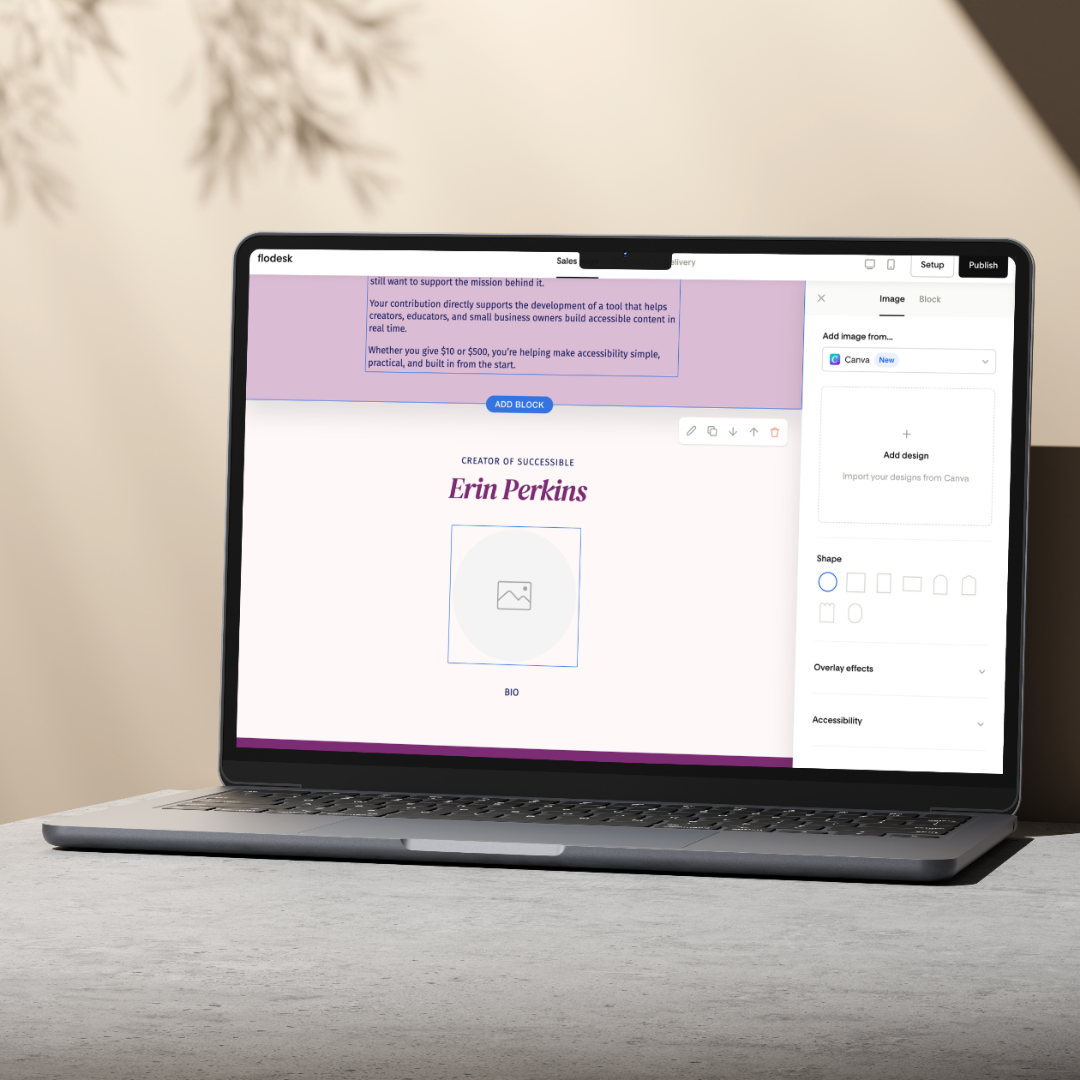
Most of my visual content starts in Canva.
Before the integration, email design meant downloading, uploading, resizing, and redoing. Now?
design in Canva
import directly into Flodesk
done
That’s a huge time win when your plate is already full.
The User Interface is clear and calm
I can’t overstate how important this is. A cluttered interface slows me down more than anything. Flodesk feels visually spacious. My brain and eyes can process it quickly, which means I can get in, create, send, and move on.
Why Checkout Became the Easiest Solution in My Tech Stack
When I started planning the Successible Live Preview, I did what every founder does: I looked at what I already had. ThriveCart. Squarespace. Stripe. Zapier. And a handful of other options I could stitch together if I really wanted to.
Then Flodesk told their partners and said, “If you want to test Checkout, go for it.”
For me, that was an easy yes.
At that point, I was looking for the least stressful one. I needed the simplest way for someone to sign up, get the confirmation instantly, and receive everything they needed without me babysitting the process.
Once I put the options side by side, Checkout was the clear winner. Not because it had every feature under the sun, but because it handled the exact things I needed:
simple sign-up
immediate confirmation
automated access emails
clean, consistent branding
built-in tagging
And it did all of that inside the same platform I already used for email.
One place. One workflow. No additional tech overhead.
No extra logins.
No duct-taping tools together.
No complicated setup.
Just click → build → publish → done.
Once I saw that, Checkout moved from “something I wasn’t using” to “the easiest solution in my entire tech stack.”
Here’s what building a Live Preview looks like:
I build the checkout page in minutes
The design matches my brand automatically
People sign up
They get an immediate confirmation
They receive the automated sequence
They get the event link
They’re tagged and segmented correctly
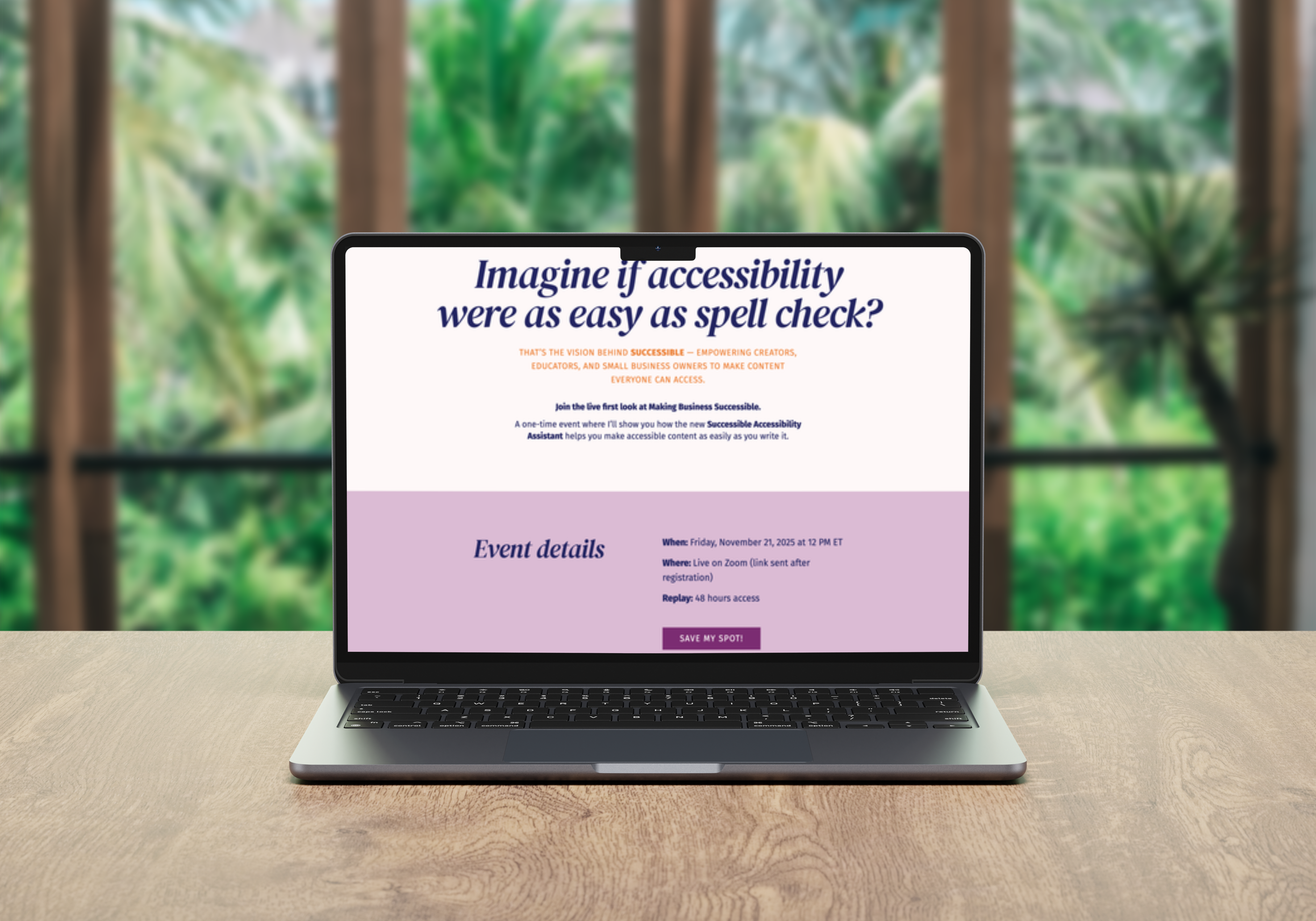
I don’t touch anything after setup.
I don’t need a VA or OBM.
I don’t need five tools.
I don’t need to worry about whether someone received the information they needed.
Everything lives inside one calm, predictable system.
For a founder building a SaaS while fundraising? That’s a gift.
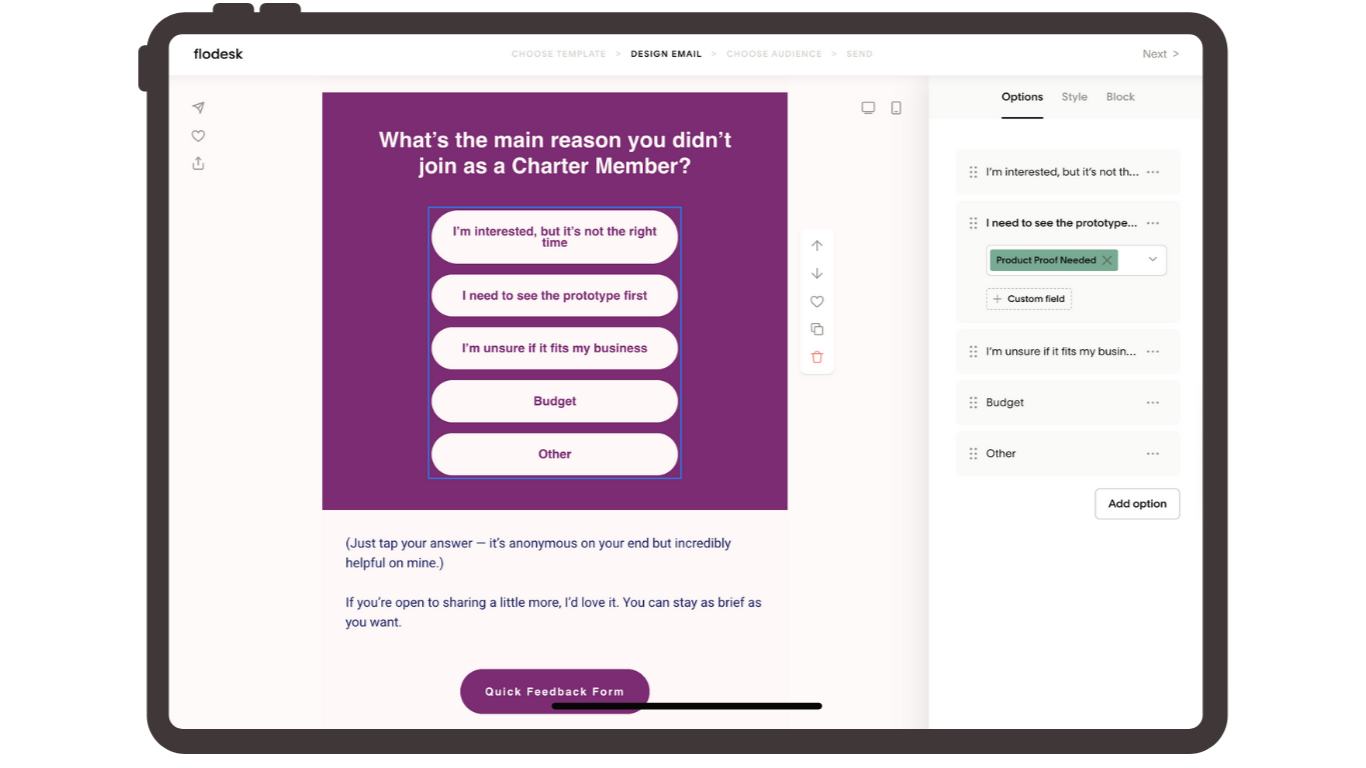
I even sent out a poll to understand why some people weren’t ready to invest yet. Flodesk made it easy to segment responses so I could create simple, targeted follow-ups for each group.
For example, when someone selected “I want to see the prototype first,” I could drop them into a Product Proof Needed segment. Now I know exactly who to reach out to the moment I have a working prototype ready.
That freedom lets me focus my energy on designing the actual product, not wrestling workflows.
Building Successible With Tools That Don’t Create Barriers
When I choose software, I evaluate both the user experience and the accessibility implications. Flodesk supports the things that reduce barriers:
clear visual hierarchy
stable layouts
easy spacing adjustments
predictable navigation
simple structure for screen readers
calm design that reduces overwhelm
Now, I want to be super clear that no tool is perfect, but Flodesk gives me a strong starting point, and as an accessibility professional, I can work with that.
What This Tech Stack Lets Me Do Right Now
Because my tech stack is lightweight and predictable, I can:
run live previews consistently (I’ve run 2 and I’m about to do a 3rd!)
communicate quickly with early adopters
bring in charter members
raise funds for development
educate my community about accessibility
maintain a consistent brand experience
avoid tech chaos during the build
And when you’re building a SaaS from scratch, that focus is everything.
Build With Tools That Support Your Vision, Not Complicate It
Building a SaaS is a long game. Raising funds while building it is even harder. Flodesk Checkout made it so effortless for me so that I could keep momentum at the exact moments I needed it.
It helped me build a stable foundation without overcomplicating my workflow.
And it supported accessibility instead of working against it.
That matters to me.
And it’ll shape how I build Successible, too.
If you’re a founder, educator, or small business owner trying to choose a tech stack: choose tools that help you stay focused, support your values, and keep things simple.
I’m inviting you to try out Flodesk for your own business and see what I’m talking about, you can start a free trial and get 25% off your first year using my Flodesk Partner link.
And that’s why it’s at the center of my tech stack while Successible comes to life.